Chargement de la page…
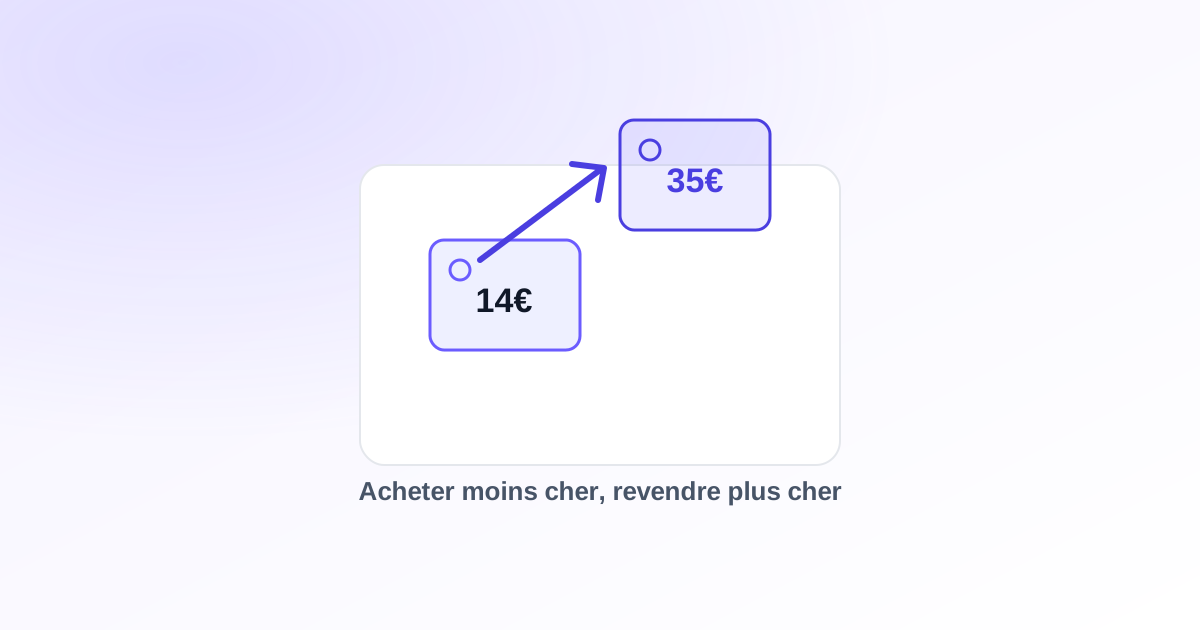
Online arbitrage means buying a product where it's cheaper and reselling it where it's worth more, pocketing the difference. Simple in theory, demanding in execution. This guide covers the 2026 basics.
The principle
The same product (same EAN/UPC) doesn't sell for the same price everywhere: it varies by country, marketplace, wholesaler or promotion. The arbitrageur spots this gap, buys, resells (usually on Amazon or eBay) and captures the difference after fees.
Online arbitrage vs. retail arbitrage
- Retail arbitrage: buying in physical stores (clearance sales, closeouts).
- Online arbitrage: buying online (websites, B2B wholesalers).
- Wholesale: buying in bulk directly from distributors.
Is it still profitable in 2026?
Yes, provided you master two things: sourcing (finding the gap) and calculating your real margin (fees, VAT, customs). Profitability doesn't come from a good product — it comes from a good net spread.
The 3 pillars of profitable arbitrage
- Sources: the more sourcing channels you have (B2B wholesalers, marketplaces, countries), the more gaps you find.
- Calculation: net margin after commission, FBA fees, VAT, returns.
- Speed: spotting the gap before everyone else.
The sources that make the difference
Beyond Amazon, hundreds of B2B wholesalers (Qogita, Faire, Ankorstore, BigBuy…) and country-specific marketplaces supply price, EAN and stock data. More sources means more opportunities.
Getting started
This blog covers every building block in detail: finding profitable products, reading BSR and the Buy Box, choosing wholesalers, calculating margin, handling VAT. ArbitragePro+ automates multi-source comparison so profitable gaps surface automatically.