Chargement de la page…
Écosystème
Marketplaces et outils suivis
Des repères utiles aux vendeurs multicanaux. Les marques citées restent la propriété de leurs titulaires.
Practical methods, comparisons and guides for online arbitrage.
Project FBA storage by cohort and duration, with dated volumes, rate cards, and surcharges, without turning a turnover assumption into a certain cost.
Check the packed product measurements, the FBA size tier, and the dated rate card before estimating fees, then treat discrepancies as alerts.

Check the category, base, and applicable Amazon rate card before calculating a commission, then reconcile the estimate with invoiced fees.

Calculate a breakeven Amazon resale price with fixed costs, variable costs, and assumptions kept separate from confirmed amounts before any purchase decision.

Compare ROI and net margin to filter an Amazon opportunity without mixing capital employed, net revenue, and estimated profit before purchase.
Calculate a traceable Amazon FBA landed cost, from supplier cost to selling fees, with assumptions kept separate from confirmed amounts.
A reproducible method for allocating a supplier order's shipping costs across products without distorting the landed cost or the estimated margin.

Normalize supplier prices into a common currency without confusing the reference rate, the transaction rate, fees, and the conversion date.

Check the license, terms of service, purposes, frequency, and redistribution rights before connecting a product feed, with an evidence and decision matrix.

Test a supplier catalog on a reversible canary batch: entry criteria, evidence, controls, stop conditions, and a decision before scaling up.

Build a supplier reliability score based on timestamps, errors, and data checks, with an explicit, revisable weighting scheme.

Combine image, brand, model, variant, and name to propose a match without an EAN, with explicit thresholds and mandatory human validation.

Spot repeated GTINs, distinguish legitimate offers from contradictory variants, and organize a reliable review backed by GS1 evidence.

Calculate the unit price at each tier by factoring in packaging, MOQ, orderable quantity, taxes, and fees without confusing a displayed discount with actual cost.

Distinguish boolean availability, exact quantity, thresholds, and supplier lead times so a stock signal is never mistaken for false certainty.
Define a separate freshness policy for prices and stock, based on timestamps, observed cadence, errors, and order risk.

Compare CSV, XML, HTTP APIs, and FTP drops by structure, frequency, resumability, security, and traceability to choose a durable supplier feed.

Compare two offers sharing the same EAN by checking variant, unit price, taxes, stock, packaging, and landed cost before making a reliable decision.

Calculate a GTIN's check digit, preserve leading zeros, and distinguish mathematical validity, GS1 attribution, and the right product with a clear method.

A practical method for checking identifiers, prices, stock, currency, lot sizes, and images in a wholesale catalog before any reliable data import.

A comparison of SellerAmp alternatives for product analysis and arbitrage sourcing: criteria and strengths to weigh up.
A comparison of Keepa alternatives for tracking Amazon prices and finding profitable gaps: criteria and strengths to weigh up.
Keepa, SellerAmp or Actorio: what each tool actually does, who it's for, and how they complement a multi-source comparison tool.

A practical guide to selling on Amazon: opening a seller account, understanding VAT/OSS, and choosing between FBA and FBM.

BigBuy in 2026: a dropshipping and wholesale platform with 24 stated categories, its strengths, its limitations, and its integration status in ArbitragePro+.

Eany.io in 2026: an AI-assisted B2B marketplace, a network of verified EU suppliers, and its active integration in ArbitragePro+'s sourcing catalog.

Qogita in 2026: beauty/health/hygiene catalog, verified suppliers, and how its prices are continuously compared to resale prices in ArbitragePro+.

Profit+ is ArbitragePro+'s Amazon profitability-tracking module currently in development: real COGS calculation, French tax rules, and automatic feedback into sourcing when a margin degrades.

Analyzer+ cross-references a product's Keepa price history with ArbitragePro+'s supplier catalog and calculates the real net margin under French tax rules before you decide to buy.

How ArbitragePro+ continuously compares over 6 million product references across 4,600 sources to surface profitable price gaps, from EAN/ASIN matching to the final opportunity.

A comparison of European marketplaces for arbitrage: Amazon, Cdiscount, Bol.com — audience, competition and how to choose.

How Amazon arbitrage works in 2026: the Buy Box, ungating, FBA/FBM, restrictions, and a method to get started without costly mistakes.
A comparison of Actorio alternatives for arbitrage and multi-source sourcing: criteria and strengths to weigh up.
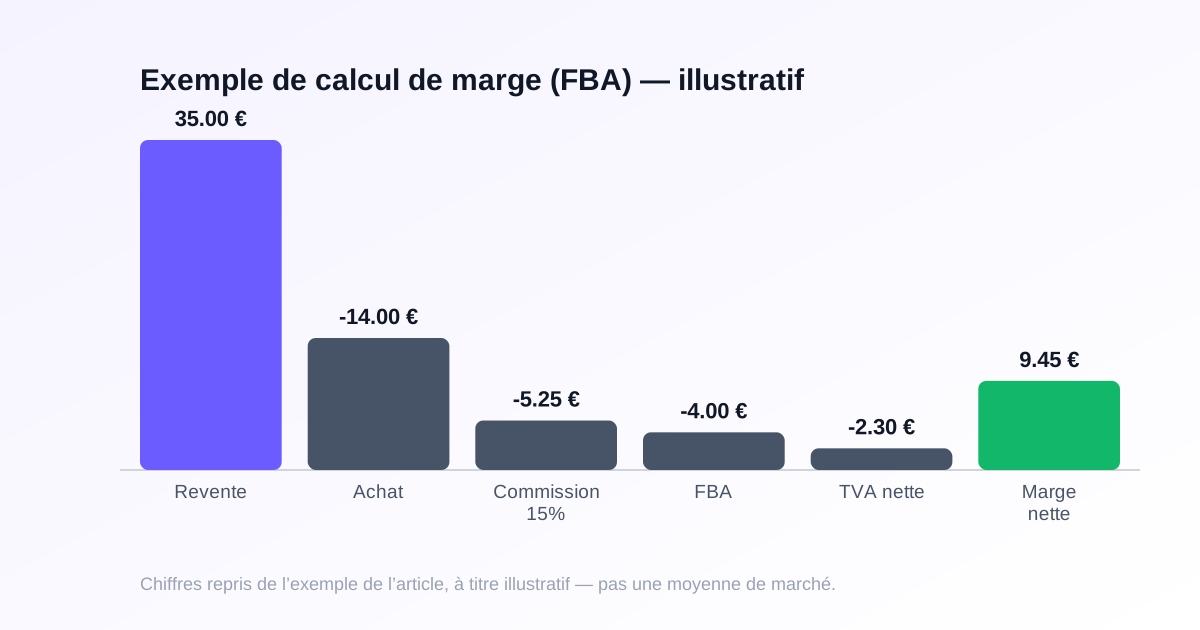
How to calculate your net margin in Amazon/eBay arbitrage: fees, VAT, customs and a worked example.
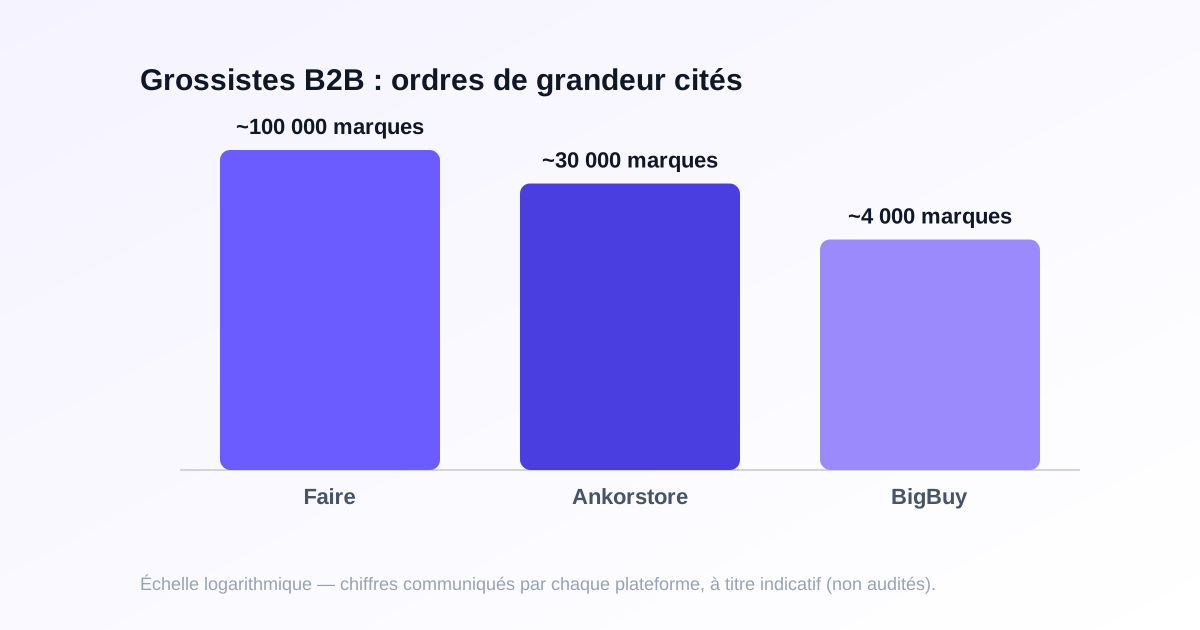
An overview of B2B wholesalers for arbitrage: Qogita, Faire, Ankorstore, BigBuy… with their strengths by category.
A repeatable method for finding profitable products to resell: criteria, sources, and signals to check before buying.
Online arbitrage compared to retail arbitrage: pros, cons, and which one to start with.
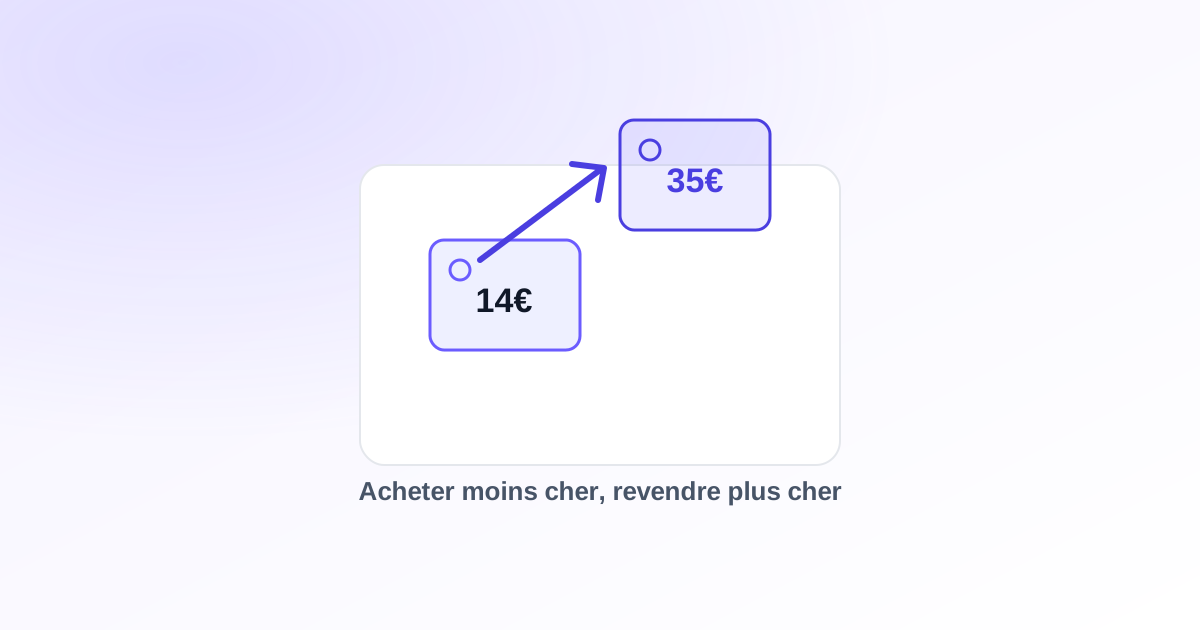
Everything you need to know about online arbitrage in 2026: the principle, profitability, sourcing, margin calculation and the right tools.